
 Shop
ShopThe Wrong Change
Daria made a math mistake and just wants to keep the two euros, since the customer will never notice. Christian thinks it still isn’t their money and starts explaining why, at length and in detail. Is something less wrong if nobody notices?
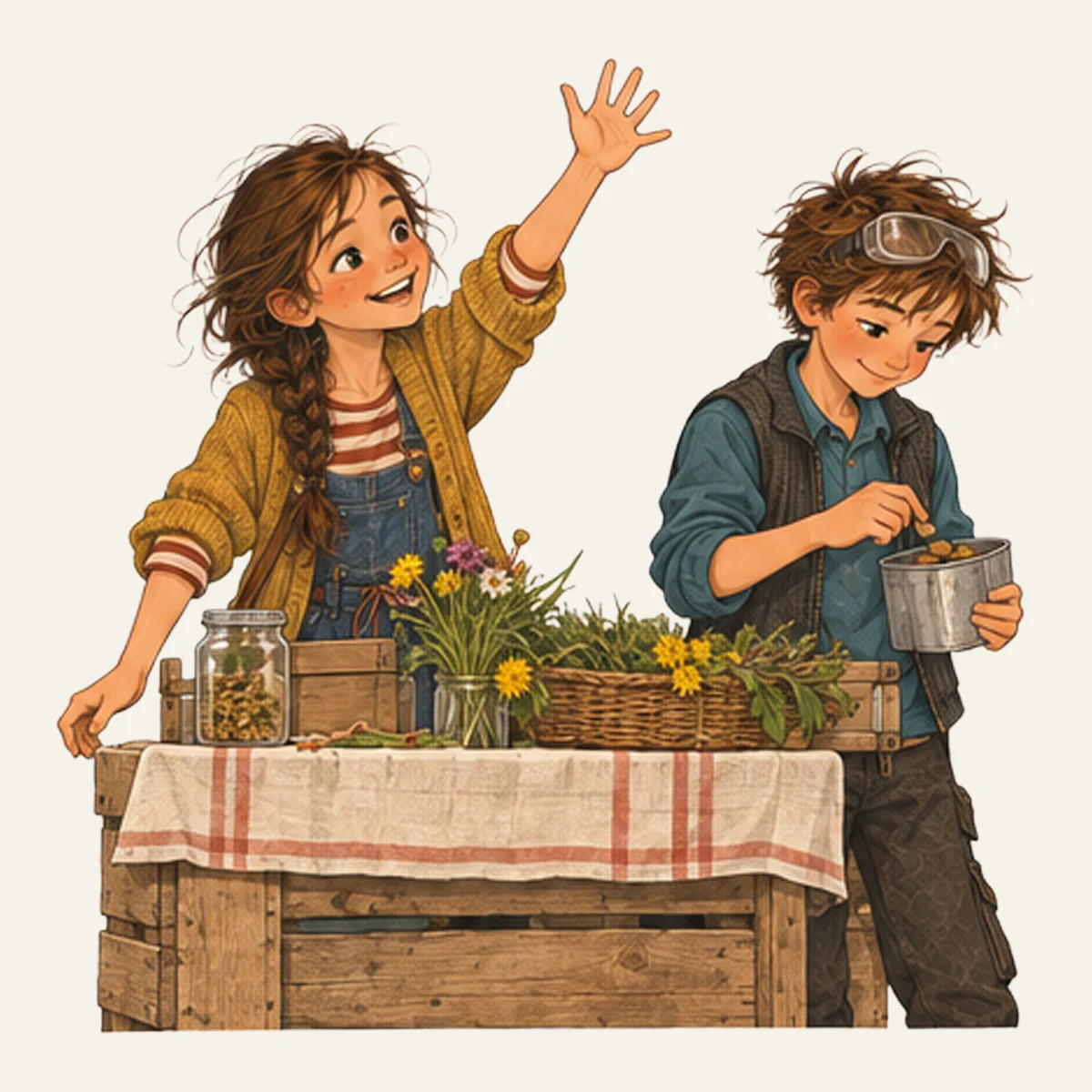
At the street flea market, their table was right in front of Daria’s garden gate: Christian’s old books, a box of marbles, and two sheets of apple cake from the tree in Daria’s yard, one euro fifty a slice. Daria had made the price sign, very big, with an exclamation point. The cash box was a cookie tin with twenty euros in change, counted by Christian, written down in his notebook, time included.
At eleven, Christian went into the kitchen to get the second sheet of cake. Of course that’s when everybody showed up at once. Daria sold two books, explained to a woman why glass marbles are better than plastic ones, and then a man in a green running jacket was standing in front of her, next to a little girl on a red balance bike with a bell. “Three slices, please.” He handed her a ten. Four fifty, Daria figured, so five fifty back, and while she was already smiling at the next customer, she dropped some coins into his hand. The man said thanks, the girl rang her bell, and they were gone.
At noon, Christian counted the cash box, like he did every hour. He counted once. He counted a second time, the coins in rows on the table. On the third time he said, “We have two euros too many.” “Awesome,” Daria said. “Profit.” “Not profit. A mistake.” He went through his tally marks, one for every slice sold. There was only one ten in the tin. “The guy with the balance bike,” he said. “You gave him three fifty instead of five fifty.”
“I don’t make math mistakes,” Daria said. That was her thing. She did math faster than anyone in her class and faster than Christian, and they both knew it. But the tin said otherwise, and the tin didn’t lie. Daria felt her face getting hot. “So what,” she said, and turned to a woman asking about kids’ books. “I’m not making a whole scene over two euros. He’s long gone.”
Christian took a breath. “First of all,” he said, “it’s his money, not ours. Second, you’d want it back if somebody shorted you two euros. Third...” The woman with the kids’ books was listening with interest. “Christian,” Daria hissed. “There are people here.” “Third,” Christian said a little more quietly, “there’s now a number in my notebook that’s wrong.”
Daria sold the woman two books and did the math out loud this time. And while she did, she thought. It wasn’t about the two euros at all. It was that she had made a mistake, in mental math of all things. If she went after the man, she’d have to say it out loud, to a stranger. And he would never notice. Nobody would ever notice. Except Christian. And her.
“Fourth,” Christian started again. Daria reached into the tin, took out a two-euro coin, and closed her fist around it. “Okay. Where’d he go?” Christian stopped in the middle of his sentence. “I wasn’t done.” “Yes, you were,” Daria said. “You just don’t know it yet.” He blinked, then said fast and precise: “Green running jacket. Red balance bike with a bell. They were heading toward the playground when I came out with the cake.” “Watch the cash box,” Daria said, and took off running.
She ran between the tables, past boxes of dishes and stacks of puzzles. Mrs. Müller was sitting at her own table, Zottel the dachshund under her folding chair. “Green jacket, little girl, red balance bike?” Daria asked without stopping. Mrs. Müller pointed down the street with her chin. “By the swings.”
The man was at the playground, pushing the girl on a swing. Daria stopped in front of him, so out of breath she had to start over twice. “Excuse me. You bought cake from us. I gave you two euros too little in change.” She held out the coin. He looked at the coin, then at her. “I never would have noticed.” “I know,” Daria said. That was the hardest sentence. Then one more: “I messed up the math. That never happens to me. Almost never.” The man laughed, took the coin, and said to the girl, “See? The cake stand kids.” The girl waved from the swing.
On the way back, Daria didn’t run. She noticed she was smiling, just like that, and that something inside her felt light, like she’d cleaned her room without anyone asking her to. She hadn’t expected that. She had expected it to be embarrassing. And it had been embarrassing. But only for about ten seconds.
At the stand, Christian had his notebook open. Under the noon total he had written: “Difference: zero.” He looked up. “I still had two more reasons.” “Tell me tonight,” Daria said. “At the garden table. With cake.” “They’re good reasons.” “I bet.” Then a boy came up with a five and wanted two slices, and Daria counted the change into his hand, coin by coin, slowly and out loud. Christian coughed into his fist so no one would hear him laugh.
Is something less wrong if nobody notices? And who exactly counts as nobody?
Two points of view
She didn’t care about the two euros. The bad part was that she’d messed up the math and had to admit it to a stranger.
For him, it was settled the second the cash box didn’t add up. That you can be right and still talk too long, he didn’t know until that Saturday.
The story does not end here.
You might have seen it differently. That is part of the point.