
 Shop
ShopYour call
Victoria gets a big chance in the lab, with more responsibility and long evenings. Sam is happy for her but worried about her everyday life and asks a lot of questions. Victoria hears in them that he doesn’t think she can handle it.
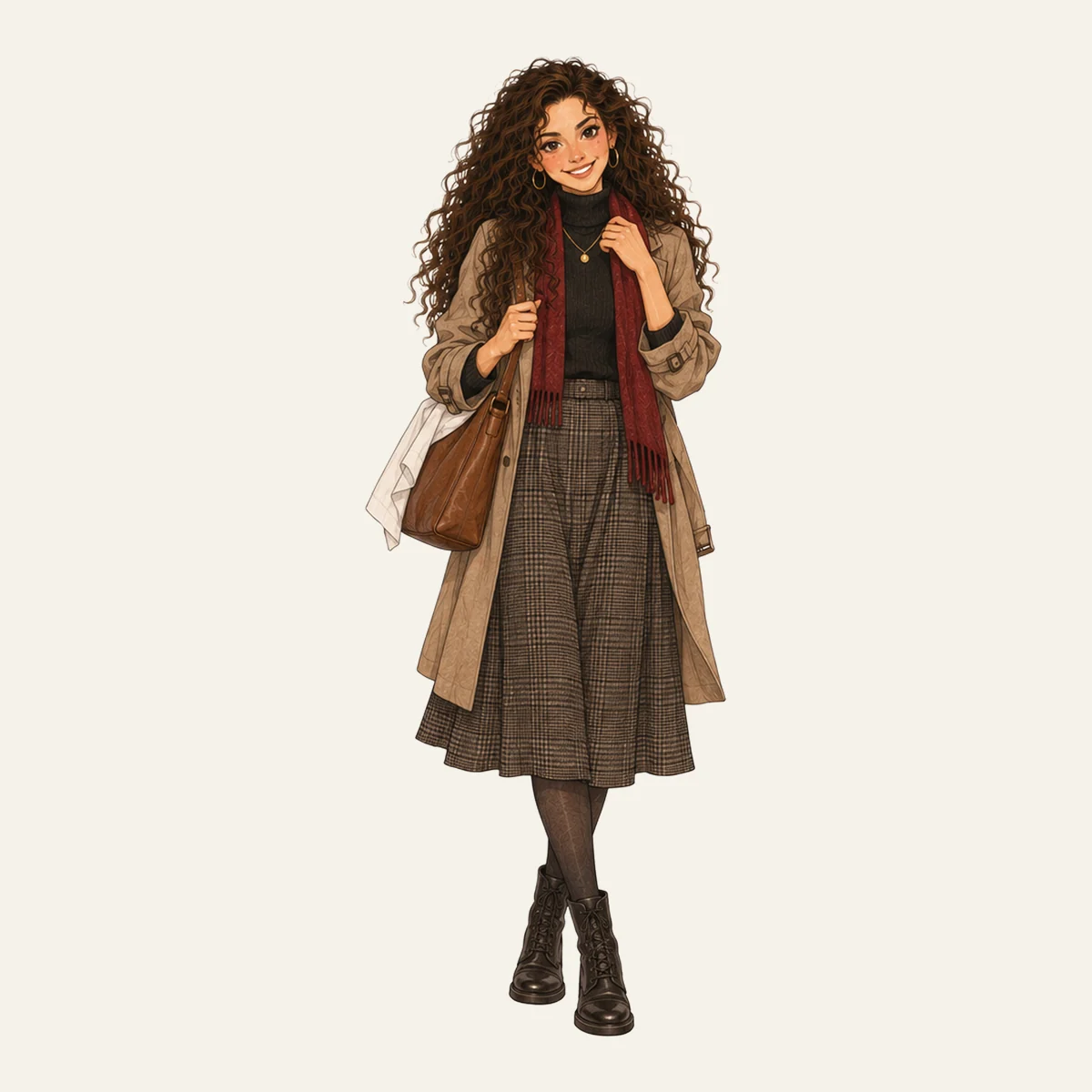
Victoria took the stairs two at a time and burst into the kitchen, cheeks red, a printed letter in her hand. “She asked me! The professor! Me!” Sam was at the stove stirring a pot of soup. Victoria read it out loud: a job as a student research assistant on a project with a forensic crime lab. Fibers under the microscope, traces that tell you where someone has been. Twelve hours a week, starting next month, often late when a series of measurements was running, and a Saturday now and then. “You know how many people she asked? One. Me.”
Sam put down the spoon, lifted her up like she weighed no more than a pillow, and spun her once around the tiny kitchen, nearly knocking the pot off the stove. “Vici. That’s huge.” She laughed. Then he set her down and asked, “Twelve hours. What about the café?”
It was just a small question. “Less,” Victoria said. “I’ll talk to Nonna.” “Wednesdays and Saturdays?” “Maybe just Saturdays.” “And the late measurements, how do you get home? The last bus leaves at eleven thirty.” “Then I’ll take that one.” “And when do you study for analytical chem? And what about Sundays?” Sam asked every question gently, but to Victoria each one felt like a brick in a wall that had suddenly gone up between her and that letter.
“You know what you sound like?” she said, already louder. “My mom. ‘Are you sure? Isn’t that too much?’ I thought at least you would just be happy.” “I am happy.” “Then stop doing the math on why it won’t work!” Sam went quiet. “I’m not doing the math on why it won’t work. I’m doing the math on how it will.” But she didn’t hear that. She was already out on the balcony.
She stood next to the little lemon tree and looked out at the dark field. She thought about Giulia, who raised an eyebrow at every big step. She thought about her five-year plan, written in pencil on the inside cover of her planner. “Lab assistant” was on there, for next year. It was showing up a year early. Why not today? And suddenly she had to laugh, because she was furious at the one person who wanted to know how she’d get home safe at night.
When she came back in, Sam had turned off the stove. He was sitting at the table with a blank sheet of paper in front of him. “I’m going to tell you what’s on my mind,” he said. “Once, all of it. Then I won’t bring it up again, and you decide.” Victoria nodded and sat down. “I’m scared of you standing alone at the bus stop at night. I’m scared you’ll tear yourself in half between the lab and Nonna because you can’t say no to anybody. And I’m a little scared for our evenings. That’s it. Those are my worries. Not your reasons.” He slid the blank page over to her. “It’s your call. I just don’t want you carrying it by yourself.”
Victoria looked at him. She thought of her dad, who never once told her what to be and still hung the periodic table on her wall when she turned fourteen. “You’re not going to tell me what to do?” “No. I want to know what you want.” “I want this. More than almost anything.” “Then it’s decided,” Sam said, and turned the stove back on.
The next afternoon she took the bus to Café Limonaia. It was Wednesday, and Daria was standing on a chair writing “lemon cake” on the chalkboard with a crooked L. Victoria told Nonna everything and waited for the disappointment. Lucia wiped her hands on her apron and looked at her for a long time. “I carried you behind this counter when you were three weeks old, Vittoria. Not so you’d stand here forever.” Then she held up one finger. “You keep Saturdays. I need you Saturdays. And on Wednesdays Daria comes in early.” From the chalkboard came an immediate “Do I get paid, then?” “You get cake,” Lucia said.
Victoria signed. The first long series of measurements came two weeks later. That afternoon, before her phone went into the locker, she texted Sam: “Running till ten. Phone’s in the locker. Can’t wait to see you.” When she walked out of the lab building at a quarter after ten, Sam was standing under the streetlight by the entrance, his bike next to him and two cups of tea in his hands. He hadn’t asked if she wanted to be picked up. A week earlier he had only said, “On late nights I’ll come get you. If you don’t want that, just say so.” She hadn’t said so.
On the way home she told him about the fibers under the microscope, how a single blue thread can give away where someone has been. Sam pushed the bike and listened. At home the kitchen looked exactly the way they had left it that morning, dishes in the sink, laundry on the chair. Victoria sighed. How long this would hold up, with twelve hours in the lab, the café, exams, and a household that had only just gotten a system, neither of them knew. Sam set the tea cups in the sink with the rest. “Tomorrow,” he said. “Today you were in the lab.”
How do you support someone through a big decision when you have worries of your own, without making the decision for them?
Two points of view
I wanted him to just be happy. Only later did I get that his questions were his way of being happy too.
I didn’t want to decide for her. I just wanted her to know what was on my mind and that she wasn’t alone with the rest.
The story does not end here.
You might have seen it differently. That is part of the point.