
 Shop
ShopSomebody Has to Win
Daria wants to win, so she rebuilds their shared idea overnight without asking Christian, and his math gets cut. In the morning Christian sees a poster with his name on it that isn’t his anymore. What is a win worth if you can’t share it?
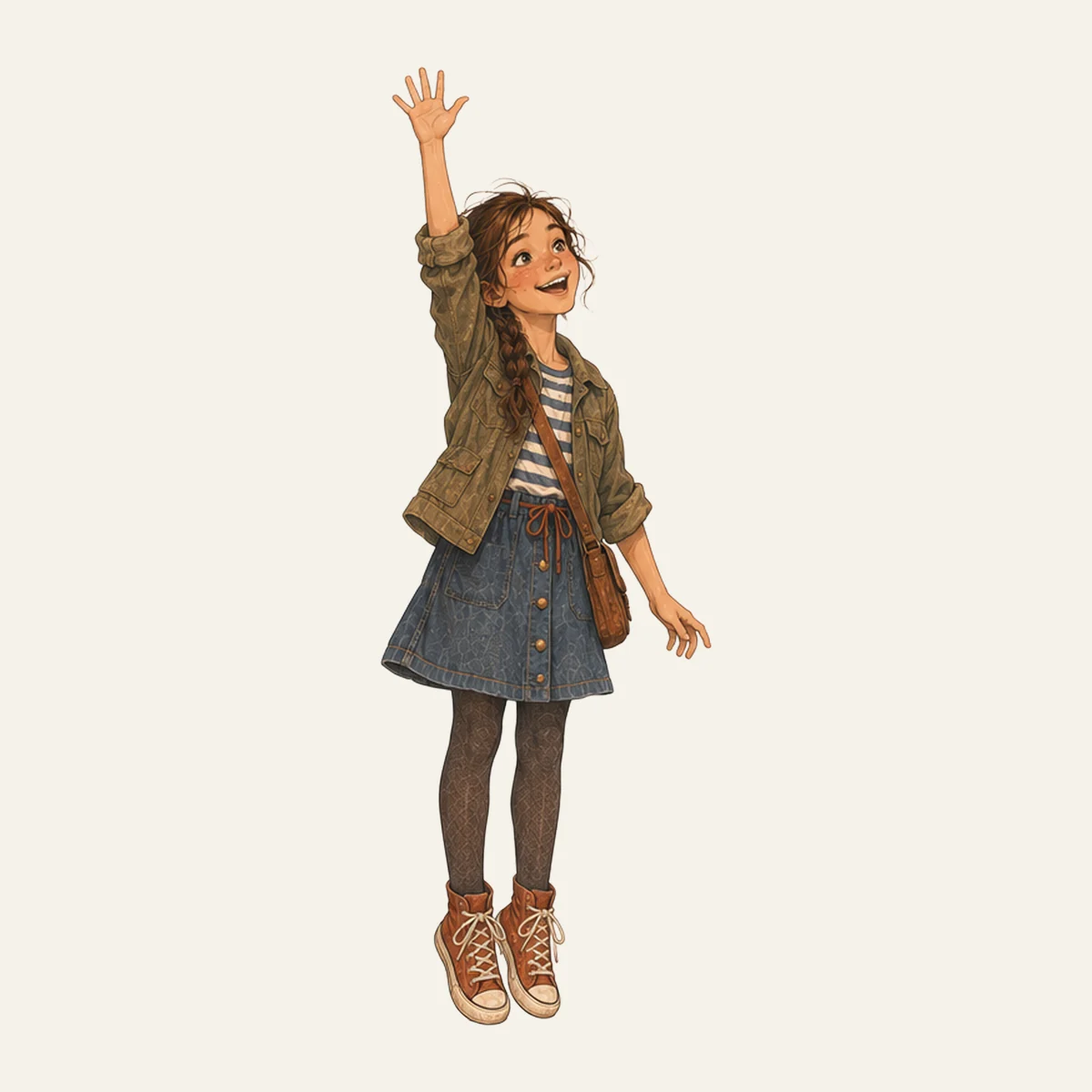
Mr. Kaminski had hung the flyer in the hallway between 5B and 5C: “Fifth-Grade Idea Contest. What’s missing from our schoolyard? Teams of two, mixing homerooms is fine. Due: Friday, first recess, teachers’ lounge.” Under it, in his handwriting: “Fast is good. Right is better.” Daria read it, waited outside 5C at recess, and before Christian was all the way out the door she said, “We’re entering. Together.” “Hang on,” Christian said. “What’s missing?” “We’ll find out.”
For two weeks they found out. Their idea was called “Gardens, Not Gravel”: two raised beds in the bare corner by the bike racks, with herbs and strawberries, taken care of by the fifth grade, the harvest sold at the summer fair, the money for new balls. Christian had found out that the Wagner carpentry shop lets kids build their own projects there on weekends, his mom went sometimes, which meant the wood would cost 42 euros instead of 110. He drew the beds and made a table: costs, watering schedule, who waters over summer break. Daria wrote the text, came up with the name, and practiced the two minutes they’d get to talk to the judges. The poster was in Christian’s handwriting with Daria’s words. At the bottom were both their names.
On Thursday afternoon, in the art room, Daria saw a model from a 5A team: a climbing wall made of pallets, with little lights that blinked, and twenty kids crowded around the table. Daria went home with a stomachache. Garden beds. Strawberries. Next to a climbing wall that blinks.
That night she sat at her desk until ten. The new poster was called “The Schoolyard Snack Stand”: the garden beds turned into a stand, herb lemonade every Friday, music, a big colorful drawing, and a slogan that rhymed. She left out the table. Nobody reads tables, she thought. She cut out Christian’s drawing and glued it, small, into a corner. She didn’t call him. It was late, she told herself. And he would have just said “hang on.”
On Friday at a quarter past seven, she unrolled the poster at the hedge. “I made it better.” Christian looked at it for a long time. He found his drawing in the corner. He looked for the table. “Where’s the math?” “Nobody needs it. The other team has lights.” Daria waited for “hang on.” Instead he said, “Stop.” And then, because after a stop you have to say why: “This isn’t ours anymore. It’s yours, and my name’s on it.”
“I wanted us to win!” Daria shouted, so loud that across the street Mr. Berger looked up from his newspaper. “Us!” “Then you should have asked me,” Christian said. He didn’t say it loudly. But he said it now, at the hedge, and not three days later in a note. The bus was coming in eight minutes.
On the bus they sat in the same row, not next to each other. Daria looked out the window and thought: if I win and he’s sitting next to me looking like that, who actually won? And she knew something else, because she was good at math: the herb lemonade cost money that nobody had figured out. Last night she hadn’t wanted to know that. In Christian’s backpack was the old poster, rolled up, with a rubber band around it. He made a copy of everything; she knew that.
At recess they stood outside the teachers’ lounge, Daria with the new poster, Christian with the old one. Mr. Kaminski opened the door. Daria looked at the roll in her hand, then at the one in Christian’s, and then she did what she’s best at: she decided fast. She took the old poster from Christian and handed it to Mr. Kaminski. “This one’s ours.” Christian looked at her, surprised. On the way back he said, “The snack stand isn’t actually bad. At the end of the beds. Next year. Once we run the numbers.”
Two weeks later the winners were announced in the auditorium. First place: the 5A climbing wall. Second place: a bench made of pallets, by two girls from 5D. Third place: “Gardens, Not Gravel, Daria Lorenz and Christian Becker, 5B and 5C.” Daria’s face went hot. Third. She had wanted first. For ten minutes she was a sore loser, arms crossed, staring at the blinking climbing wall. Then she walked over to the 5A team and congratulated them, and meant it: “The lights are really good.”
On their certificate was one sentence in Mr. Kaminski’s handwriting: “The only idea with math that actually adds up. We missed a little bit of boldness.” Daria read it twice. “See? Boldness!” “And math,” Christian said. On the bus home they argued about which half of the sentence mattered more, and it was the best argument they’d had in weeks.
That evening Daria hung the certificate on the shed door, next to the feeding schedule. Under it she wrote in pencil: “Next year: snack stand. With the numbers.” Christian read it, took the pencil from her, and wrote underneath: “With lights?” Daria looked at him. Then she held out her hand.
What is a win worth if you can’t share it? And would first place with Daria’s poster have been a win for both of them?
Two points of view
She wanted to win for both of them, and to do it she made the call alone overnight. On the bus she realized a win without Christian wouldn’t have been hers either.
It wasn’t about the lemonade. It was about his name under something he had never seen. This time he said so right away, not days later.
The story does not end here.
You might have seen it differently. That is part of the point.