
 Shop
ShopWhat gets to stay
Mila wants to keep the traces of the past, and Leo sees the crumbling station as a chance to build something new. Each thinks the other one is blind, and the fight gets personal fast.
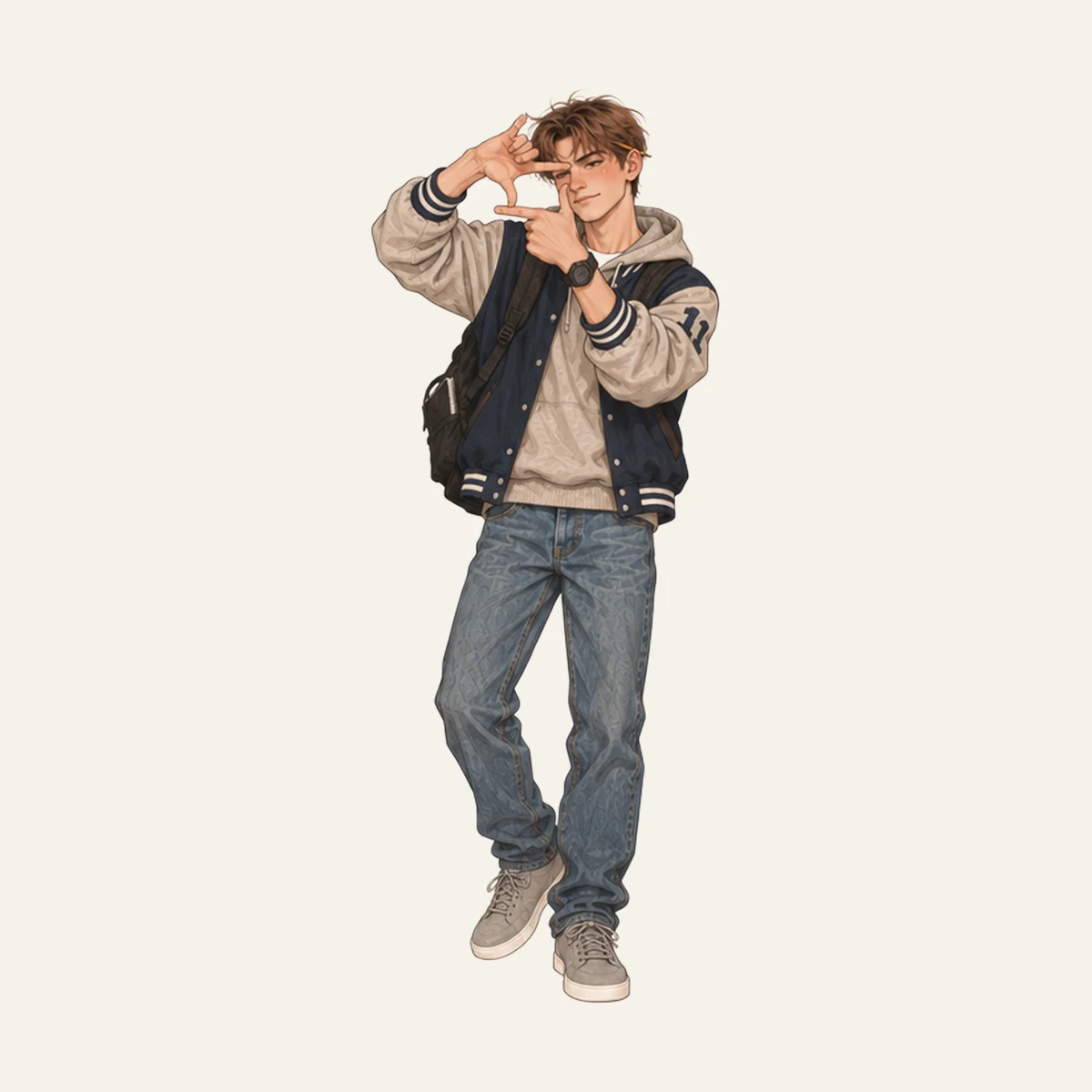
Leo said it like it was nothing: “I want to show you something. You don’t have to say anything about it.” The old train station sat at the end of a street hardly anyone drove down anymore. The main hall was locked, but the platform under the glass roof was open, and across from it was a bench. “I’ve been sitting here since I was twelve,” Leo said. Mila understood she was the first person he’d ever brought here.
She didn’t look at the glass roof first. She looked at the birch trees between the tracks, skinny, with yellow leaves, growing straight out of the gravel. She knelt down and started shooting: moss along the edge of the platform, a tiny fern in a crack, and under the edge of the roof, a row of round mud nests. “House martins,” she said. “They’re down south right now. In the spring they come back. Right here, to the same nest.”
There was a notice on the fence. The city was looking for ideas for the old station, and anyone could submit drawings until the end of the month. Leo had spotted it two weeks ago and had been drawing every night since. He opened his sketchbook: the hall was a library with wide steps to sit on, glass everywhere, the tracks covered by a wooden deck, a café on the platform. Everything bright, everything straight. “The roof stays,” he said. “The roof is the best part.”
Mila looked at the page for a long time. “Where are the birches?” “They’d have to go. The roots get into the foundation.” “And the nests?” “There’s room for nests under a new roof too.” “Not for these. They don’t build on glass.” Leo flipped the page, faster. “I figured you’d take the photos for it. Before and after. Your photos show how wrecked it is, my drawing shows what it could be.”
Something in Mila went cold. “My photos don’t show how wrecked it is. They show what lives here.” “Nothing lives here. It’s falling apart.” “You’ve been drawing this place for three years, and now you want to make it all smooth.” “I want to save it. You just want to photograph it until it collapses, because it looks so nice and broken in pictures.” It was out before he’d thought about it. Mila went quiet, and when she spoke again her voice was soft and steady. “And you want to keep improving it until there’s nothing left.”
Leo snapped the sketchbook shut, way too loud for that quiet place. “I’m gonna take a walk.” He went all the way down the platform and kept going. Mila stayed. She was angry, and under the anger was something worse: he’d shown her his place, and within fifteen minutes she’d found something wrong with it.
She kept taking pictures because she didn’t know what else to do. And through the camera she saw what she’d missed before. A beam under the roof, dark with water, a crack running straight across it. Three missing panes of glass. Rust-brown puddles on the platform where the rain came in. A chunk of plaster on the ground, so fresh the broken edge was still pale. It’s falling apart, Leo had said. That wasn’t a lie. It just wasn’t the whole story.
Almost an hour later he came back, hands in his jacket pockets, and sat down on the bench with one knee pulled up. “I was sitting way down there,” he said. “And for the first time I looked at the roof from the other side.” He opened to a fresh page. “The birches grow exactly where the glass is missing. Right where the light comes in. I’ve been drawing this roof for three years, and I never saw them. I always left them out because they messed up the lines.”
Mila sat down next to him, a hand’s width away. “That beam up there is wet. All the way through. I didn’t see it because I was looking at the nests.” “My mom says a building nobody uses dies from the inside.” “And I say a building you empty out completely isn’t an old building anymore.” Leo nodded slowly. “The ‘nice and broken’ thing was messed up. I’m sorry.” “So was the ‘smooth’ thing,” Mila said. “A little.”
Then he drew, and she talked. The hall became a library, that part stayed. But where the glass was missing, the roof stayed open: a courtyard with the birches, the old platform edge with the moss underneath, and a bench. The swallows’ nests stayed under the old roof edge, and the reading room got windows that looked right at them. Leo didn’t erase anything. He drew the new over the old lines. They argued about the tracks one more time, he wanted to cover them, she wanted to see them. In the end a strip of track stayed visible under glass, a compromise neither of them thought was pretty and both of them kept.
Mila set the sketchbook on the bench and photographed the page so the real roof showed up behind it. On the screen you could see both: what was there and what could be.
That evening the drawing was lying on Leo’s kitchen table when his mom got home from the construction site. She set her steel-toe boots by the front door, leaned over the page, and looked at it for a long time. Her finger stopped on the birches. “Those are new.” “They’ve always been there,” Leo said. “I just never drew them.” His mom tapped the paper once. “Good,” she said. That was it. Leo knew how rarely she said that.
They hadn’t decided whether they’d submit it. Mila looked at the photo again that night. She didn’t know which half she liked better, the old or the new. Maybe that was the answer.
Mila saw the birches, and Leo saw the wet beam. Each of them missed something the other noticed right away. Can someone else’s way of seeing make your own better?
Two points of view
To her, the station was full of life nobody paid attention to. She didn’t want to see that it was slowly falling down.
He wanted to save his favorite place and emptied it out in his head to do it. It took Mila to show him what he’d been leaving out for three years.
The story does not end here.
You might have seen it differently. That is part of the point.