
 Shop
ShopEveryone knows better
Their classmates decide Mila and Leo are a couple before the two of them know what they are. Mila refuses to be pushed into explaining anything, Leo laughs the questions off, and soon Mila is mad at him too.
It took Leo four Saturdays to finish the fall window at Limonaia. Leaves in red and ochre, a lemon tree in a pot, steam rising from a cup. On the fourth Saturday, down in the bottom right corner, between the leaves, he painted a golden dog with its head on its paws, looking out. Grandma Lucia clapped her hands and said, “He who paints last paints best.”
On Monday there was a picture of the window in the class group chat. Underneath: “First the heart, now the dog. Got it.” Everybody knew Honey, Mila’s golden retriever. He’d waited outside the auditorium during the exhibition, and ever since, some kids called him Mila’s bodyguard. And everybody had seen the two of them, at the outdoor court, at the bus stop, on Saturdays outside the café. By ten, the picture had made it to Leo’s class too.
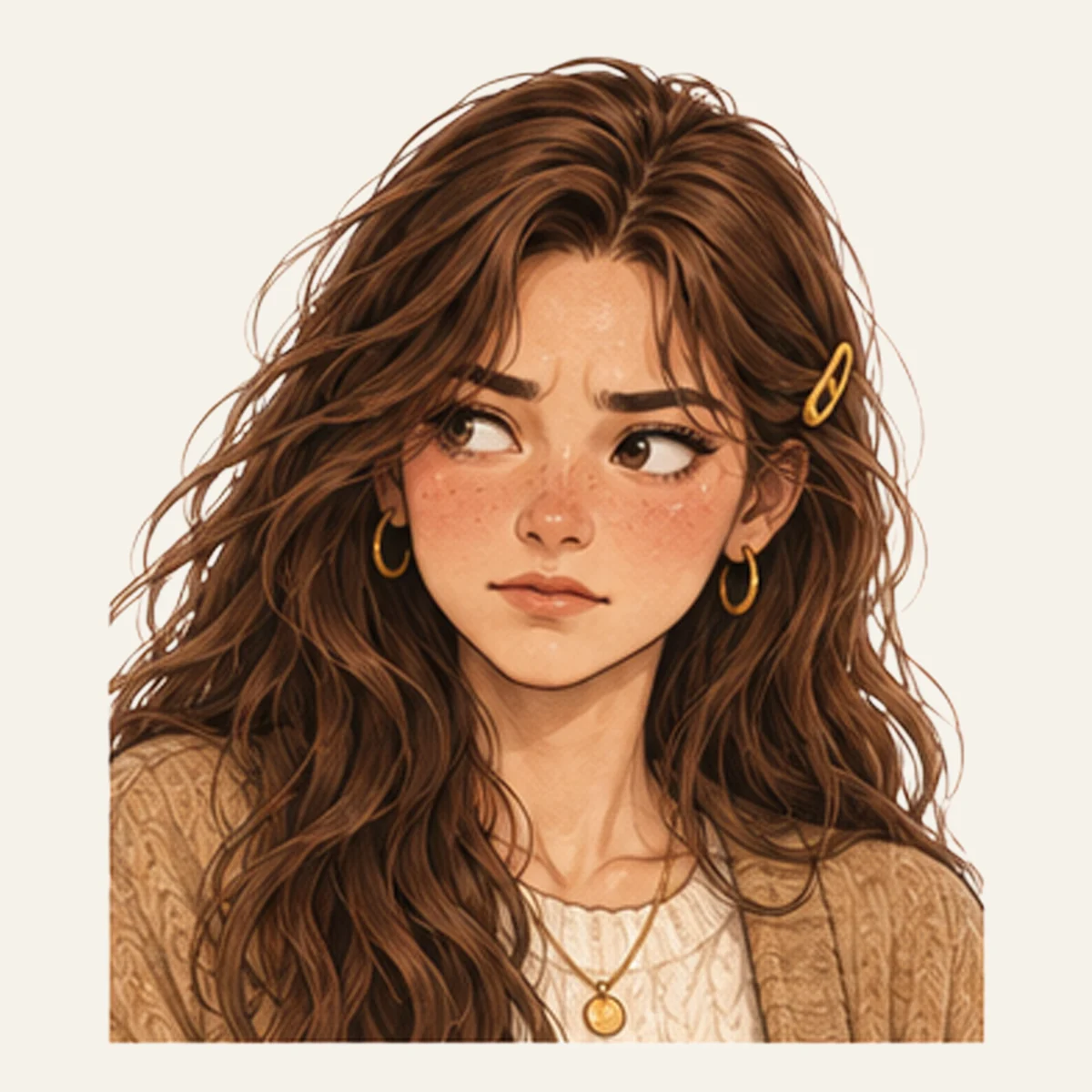
It was a long day. In the cafeteria someone barked softly when Mila walked by. Two girls from the other tenth-grade class asked, “So since when?” A guy from Leo’s team yelled, “Is he gonna paint you next?” Before bio, someone had drawn a dog with a heart on the whiteboard. Mila wiped it off before the teacher came in, her ears burning. Liv walked next to her all day and didn’t say a word, because she’d promised. Only on the bus did she say, “I’m not saying anything. Not even ‘told you so.’” “You never told me anything.” “Exactly.”
Leo handled it differently. When someone at the hoop asked him, he said it loud enough for half the schoolyard to hear: “The dog and I are just friends. He wants to take things slow.” The team cracked up. Somebody barked. Leo barked back. Mila was standing at the window of the bio lab and saw the whole thing, and she felt something that was neither laughing nor anger, more like a pebble in your shoe you can’t find.
That afternoon Leo texted: “You taking him out today? Bridge, at five?” Mila went, because she had something to tell him. Honey ran straight to Leo, like always. Leo crouched down. “Hey, celebrity.” “Stop,” Mila said. It came out sharper than she meant it to. Leo stood up.
“You think this is funny.” “Not funny. But…” “You bark back, Leo.” He ran his whole hand through his hair. “What am I supposed to do? If I get mad, everybody thinks it’s true.” “That what’s true?” He opened his mouth and didn’t say anything. Under the bridge the water kept moving, and Honey sniffed at a post.
“It doesn’t even bug me what they’re saying,” Mila said. “It bugs me that they’re saying it before we do. That everybody already knows what we are, and we…” She stopped and started over. “I don’t want to find out what I think from a group chat.” “And I don’t want them to notice I actually care,” Leo said. “That’s why I laugh. If I laugh, they’ve got nothing on me.” “Yes, they do,” Mila said. “Me. When you say the dog wants to take things slow, they’re not laughing at the dog.”
Leo was quiet for a long time, which almost never happened. “Okay,” he said. “I didn’t see that.” Then: “Want me to stop? With the barking?” “Yes. Please.” “And what do we say when they ask?” Mila thought about it. “Nothing. We don’t owe them an answer just because they have a question.” “Not even ‘we’re just friends’?” “Why, are we just friends?” It was out before she’d thought about it. Leo looked at the water. “I don’t know. Do you?” “I don’t know either.” “Then we don’t say that either,” Leo said. “That part’s ours.”
Then Mila asked the question she’d actually come to ask. “Why did you paint him?” Leo looked down at Honey, who had settled in at his feet. “Because he sat in front of that window and watched me for four Saturdays straight. He was the only one who never asked what I was doing.” “And that’s it?” Leo hesitated. “Mostly,” he said. Mila didn’t ask any more. That part was hers.
The next day somebody barked in the schoolyard again. Leo didn’t bark. He didn’t laugh either. He just looked over and didn’t say anything, long enough that it got uncomfortable for the other guy. At lunch a girl from Mila’s class asked, “So? Are you guys together now?” “Ask me when I know,” Mila said. The girl laughed, not sure what to do with that, and didn’t ask again.
The dog stayed in the window. When a kid from class asked at the café, half joking, whether Leo was going to have to paint over him, Grandma Lucia shook her head. “The dog stays. He is a regular.” On Saturday Mila sat at her usual table and saw the painted dog from behind, and on the other side of the glass sat Honey, looking in. What the others saw in it was up to them. What Mila saw in it was up to her.
For their classmates, one painted dog settled it. Mila and Leo still didn’t know themselves. Why do other people want to put a name on a relationship before the people in it do?
Two points of view
She wants to figure out for herself what’s between her and Leo, at her own pace. When Leo plays along with the jokes, it feels like he’s letting everyone else answer for them.
For him, laughing is a shield: if you laugh, you don’t give anything away. He didn’t notice that Mila was standing behind that shield with no cover at all.
The story does not end here.
You might have seen it differently. That is part of the point.